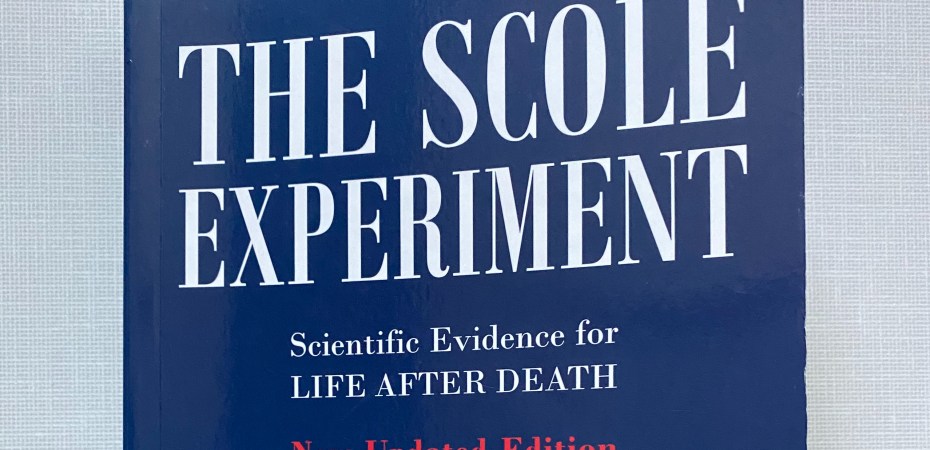
In the town of Scole, Norfolk a five year investigation to be named “The Scole Experiment” began in 1993. The goal was to produce tangible evidence of the afterlife. The experiment consisted of a base group of investigators, which included two mediums, and a dedicated space in a cellar to conduct dark room sessions for communicating with the “other side”. The book outlines these experiments and provides photographic evidence along with reports from visitors to the site. The group created a space in the cellar with a table and chairs. During the sessions, the mediums would go into a trance and allow guides to speak through them to describe experiments that were being conducted by the “other side” in order to communicate with the group. The guides and mediums insisted that the experiments must be conducted in the dark and that light sources would interfere with the ability for the guides to conduct their experiments. Objects would appear on the table or be moved by unseen hands, lights would appear and move through the room, and as the group became more advanced, they conducted experiments with reels of film that would later have images imprinted onto the film frames. Visitors would report feeling hands touch them or hear voices in the dark room that could not be attributed to the people present. The experiment was frequently conducted with members of the Society for Psychical Research (SPR) present. The report submitted by 3 members of the SPR was hotly debated by members with some fully in support of the experiment and others highly critical of the entire set-up.

Would I recommend this book? It really depends on the reader whether or not I would recommend this book. It is useful to see the types of “experiments” that have been conducted and how they were received by the public. It paints a very nice picture of seance style experimentation and can be very useful in understanding how the art of “mediumship” works. The experiment itself has a LOT of faults and someone who is willing to believe could easily accept everything presented at face value. (You shouldn’t.) This book challenges the critical thinker to find the truth in the pudding.
Pros: I appreciate the detailed descriptions of the set-ups and processes involved in the experiment (even if I think information was omitted). Additional “Perspectives” sections allow visitors from a variety of scientific backgrounds to reflect on what they observed during their visit to the experiments. The photographic evidence is interesting to see and allows the reader to get a clearer picture of what was occurring throughout the process.
Cons: The experiment itself is flawed. It was conducted in the manner of a “home circle” group, much like seances during the Victorian era. The home owners eventually renovated a cellar room for the circle and made alterations in consultations with the entire group (including the mediums) to make the room suitable for the experiment. The “spirit guides” (voiced through the mediums) insisted that the work couldn’t be conducted with lights on so all seances were held in the dark. Visiting scientists could rarely impose any controls to the experiment and all alterations to the experiment had to be approved by the “spirit guides”/mediums. The concept of a group of “spirit” scientists on the “other side” attempting to form methods for consistent and believable communication with modern people is interesting but they set-up makes it very difficult to believe no matter how many photos are presented.
Overall thoughts: As I’m sure you can tell by now, I’m very skeptical of this particular experiment. The book gave me a lot to think about and made me question some of my ideas about how “spirit” communication can work. It also caused much frustration due to the low standards for experimental design and control. If you decide to dive into this one, think of it as a more advanced version of the Victorian home group seances.
You can get your own copy here.
 Investigative Curiosity